When the sun sets, your backyard doesn't have to become a space you leave behind. A softly illuminated walkway guides you toward the patio. The outdoor kitchen remains open for dinner, and the glow from a nearby fire feature makes it tempting to stay outside a little longer.
These details don't happen by accident. They are the result of a lighting plan that considers how the landscape looks, and functions, after dark.
Low voltage landscape lighting is more than just a way to illuminate your yard. It's an opportunity to shape the atmosphere, improve safety, and make your outdoor living space feel like a natural extension of your home. When planned alongside the rest of your outdoor features, lighting can help bring your entire property to life.

Low voltage landscape lighting is an outdoor lighting system that typically operates at 12 volts, rather than the standard household voltage of 120. A transformer converts electricity from your home's power supply to the lower voltage needed to operate compatible fixtures.
This makes 12 volt landscape lighting a popular option for residential properties, where fixtures may be used to illuminate pools, patios, gardens, retaining walls, outdoor kitchens, and other landscape features.
The real advantage is the flexibility it offers. Instead of relying on a few glaring fixtures to brighten an entire yard, homeowners can use different types of low voltage lights to create distinct focus areas.
For example, path lights can guide guests toward the patio, while discreet uplighting draws attention to a mature tree or architectural detail. Subtle lighting around steps improves visibility, and softer illumination near seating areas creates a comfortable atmosphere for conversation.
The goal isn't to make every part of the yard equally bright. It's to create a balance of light and shadow that helps the landscape feel inviting and visually interesting after dark.
A low voltage lighting system has three main components: a transformer, wiring, and fixtures. Each plays a role in creating consistent illumination throughout one’s property.
The transformer converts household electricity to the voltage required by the lighting system. Its capacity needs to accommodate the total load of the connected fixtures, with appropriate room for planned additions where needed.
The wiring carries power from the transformer to each light. Wire selection is one of the technical details that helps a lighting system perform as intended. The correct wire gauge depends on the distance electricity needs to travel, the total wattage of the fixtures, and the amount of voltage drop the system can accommodate
The wiring plan should account for the entire system rather than treating each fixture as an isolated decision. Depending on the property's size and layout, the installation may require multiple circuits or a different arrangement to maintain consistent illumination.
The fixtures provide the illumination itself. Their placement, brightness, beam angle, and color temperature determine how the landscape looks at night.
A well-designed system considers all three components together. For example, a long pathway with several lights may require a different wiring layout than a small patio with a few accent fixtures. Planning these details in advance helps maintain consistent illumination and makes future adjustments easier.
Timers, photocells, and compatible smart controls can also automate the system, allowing lights to operate according to your schedule or available daylight.

For homeowners investing in a custom outdoor living space, lighting needs to do more than make the property visible. It should support the way the space is used while enhancing the design.
An outdoor kitchen is more useful when preparation areas are properly illuminated. A covered patio becomes a more inviting place to gather when the lighting is warm and comfortable. And a poolside lounge can feel like a private retreat when subtle light highlights the surrounding landscape without creating unnecessary glare.
Low voltage outdoor lighting makes it possible to give each area a distinct purpose. Task lighting can support cooking and food preparation, while softer ambient light creates a relaxed setting for dining and entertaining.
These layers allow homeowners to continue enjoying their outdoor spaces after sunset without sacrificing the atmosphere that makes them special.
Lighting also plays an important role in how people move through a property. Walkways, steps, changes in elevation, and transitions between different surfaces should be easy to recognize after dark.
Path lights can help safely guide movement through the yard, while discreet fixtures near stairs and retaining walls improve visibility where it's needed most. The placement and direction of each fixture matters just as much as the amount of light it produces.
Because low voltage systems can accommodate a variety of fixture types, lighting can be integrated into the landscape without relying on a few overly bright fixtures to illuminate an entire area. The goal is to provide visibility where it's needed while maintaining a comfortable atmosphere.
Landscape lighting can change the way homeowners experience their property at night.Trees become a focal point, stonework takes on added depth, and carefully arranged planting beds take on a whole new identity after dusk.
Low voltage landscape lights offer flexibility when highlighting these details. Rather than illuminating every feature equally, a thoughtful design identifies what deserves attention. By coordinating fixture placement, brightness, and beam direction, the lighting can establish visual hierarchy and connect different areas of the yard.
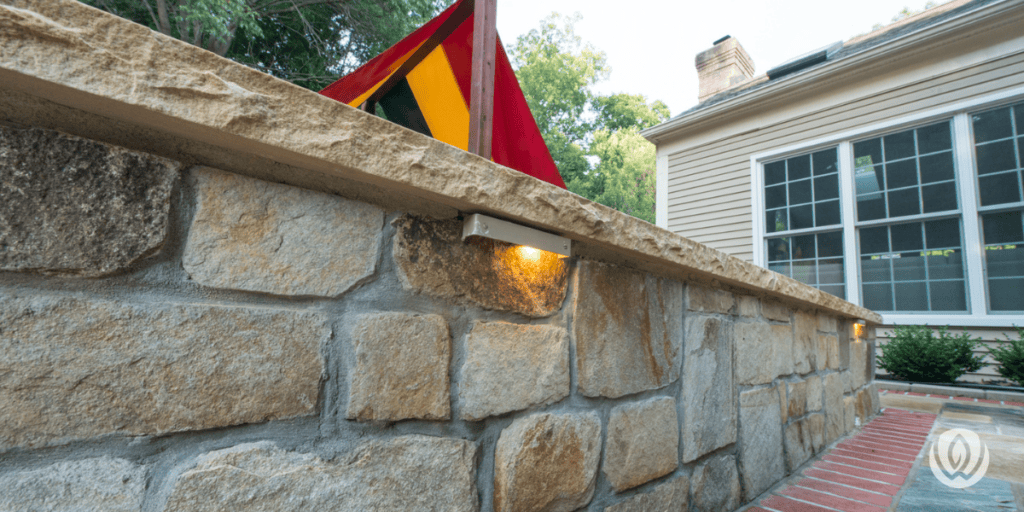
LED technology is a popular choice for residential landscape lighting because it combines energy efficiency with a wide range of fixture styles and lighting effects.
However, choosing the right low voltage LED landscape lighting involves more than selecting a fixture that looks attractive.
Color temperature influences the mood of the space. Warm white light, often around 2700K to 3000K, can complement natural stone, wood, and planting materials while creating a relaxed atmosphere. The best choice depends on the surrounding finishes and the desired effect.
Brightness and beam angle determine how light interacts with the landscape. A narrow beam may highlight a tree trunk or architectural detail, while a wider beam can illuminate a larger planting bed. More brightness isn't always better; excessive light can flatten visual details and create glare.
Fixture placement is just as important as fixture selection. Lights should highlight their intended features without shining directly into windows, seating areas, or neighboring properties.
Durability matters, too. Outdoor fixtures should be appropriate for their exposure to moisture, weather, soil, and other environmental conditions. Their materials and finishes should complement the overall design.
When these decisions are coordinated, the lighting feels intentional. Each fixture contributes to the overall effect instead of competing for attention.
For homeowners exploring landscape lighting, solar fixtures can seem like an easy place to start. They're widely available, simple to install, and don't require wiring to a transformer. But when you're planning lighting for an entire outdoor living space, convenience is only one consideration.
The right system also needs to provide the type of illumination you want, work with your property's conditions, and complement the overall landscape design. Understanding how solar and low voltage landscape lighting differ can help you decide which approach makes the most sense for your project.
Low voltage landscape lighting- is often a good fit for homeowners looking for a cohesive lighting design across multiple outdoor living areas.
A transformer connects to your home's electrical supply and distributes power to fixtures through low voltage wiring. This allows lights to be positioned along pathways, around patios, near retaining walls, and throughout planting beds as part of a coordinated plan.
When properly designed, the system can provide consistent illumination and highlight the features that make your landscape unique.
Solar landscape lighting- offers a simpler installation because individual fixtures typically use built-in solar panels and rechargeable batteries rather than wiring connected to a transformer. This can make solar lights a practical option for smaller areas or locations where running wire would be difficult.
However, their performance depends on factors such as sunlight exposure, weather, battery condition, and fixture quality, which can affect how reliably they illuminate a space.
For a larger outdoor living project, low voltage lighting often offers greater flexibility when coordinating illumination across different areas of the property. Solar lighting can work well for more targeted applications where installation simplicity is the priority.
Ultimately, the best solution comes down to the experience you want to create. By considering lighting early in the landscape design process, you can choose a system that complements your property's features, supports your lifestyle, and creates a welcoming atmosphere at nighttime.

The best time to plan your landscape lighting design is right alongside the rest of your outdoor environment plans. When lighting is considered at the same time as your other features, it's easier to position fixtures discreetly and coordinate the wiring with the construction process.
Start by thinking about how you want to use the space after dark. Do you envision family dinners on the patio, evenings around a fire feature, or a quiet garden retreat? Each activity creates different lighting needs.
From there, consider how the individual areas connect. A pathway should lead naturally toward its destination. Lighting near an outdoor kitchen should support cooking without making nearby dining areas feel too bright. Trees and planting beds can frame a seating area, while subtle illumination along a retaining wall can help define the landscape's structure.
It is equally important to plan for the future. If you expect to add a pergola, expand a patio, or introduce new landscape features, those possibilities should be considered before the initial installation is complete.
The most successful lighting designs don't rely simply on more fixtures. They rely on thoughtful placement, coordinated layers, and a clear understanding of how the property should feel after sunset.
Low voltage landscape lighting can transform the way you experience your property and bring a new dimension to the architecture and landscape you've invested your time and money in.
At LiveWell Outdoors, we understand that lighting works best when it's part of a larger vision. The placement of each fixture should complement the materials, structures, planting, and gathering areas around it.
Ready to enjoy your landscape in a new light? Schedule a call today to start designing the beautiful and functional outdoor space of your family’s dreams.
"*" indicates required fields