
An inground pool is often the crown jewel of a luxury backyard design. But it can also completely transform the way you and your family use your yard.
It can become a place for morning exercise, afternoon relaxation, family gatherings, or quiet evenings by the water.
But creating that kind of outdoor experience involves much more than just picking a pool out of a catalog.
From the materials your pool is made with, to the size of your pool, to how well it fits into the surrounding landscape, the decisions you make before construction begins can determine how well the finished space works for years to come.
That's why inground pool planning should always begin with considering the bigger picture. Before you schedule your first design consultation, here are some key elements to keep in mind.
One of the biggest decisions you'll make when planning a new inground pool is what material your pool should be made from.
The two primary options for inground pool construction are fiberglass and concrete, also known as shotcrete.
Neither is inherently right or wrong. The better choice depends on how much customization you want and what you're hoping to create.

Fiberglass pools are manufactured off-site and delivered as a pre-formed shell.
One of the biggest advantages of fiberglass is speed. Because the pool arrives already formed, installation can move more quickly than a fully custom concrete pool.
The smooth interior surface is also comfortable underfoot and resistant to algae growth, which can make ongoing maintenance easier.
The trade-off, however, is customization.
Fiberglass pools are limited to the shapes, sizes, and depths offered by the manufacturer. If your property or vision calls for something outside those predetermined options, you'll have fewer opportunities to adapt the pool to the landscape.
Fiberglass can be a good choice when a homeowner wants a relatively straightforward pool with a predictable design and shorter installation timeline.
Unlike their fiberglass cousins, custom concrete pools are constructed on-site using the shotcrete method. This allows the pool to be built around the property rather than selected from a predetermined mold.
That flexibility opens up significantly more design possibilities.
A custom concrete pool can incorporate:
If the backyard has a significant slope, an unusual footprint, or an existing landscape feature worth preserving, custom construction allows the pool to respond to those conditions rather than forcing the property to accommodate a predetermined shape.
This is why contractors often build exclusively with custom concrete. It provides flexibility to design around a property’s unique layout and a homeowner's vision.
Because the construction is more labor-intensive and every element is built specifically for the project, the investment in a concrete pool is typically higher than fiberglass.
But for homeowners looking to create a truly custom outdoor living environment, that flexibility can be worth it.

There is no universal answer when it comes to inground pool sizes.
The right dimensions depend not only on the size of your property but also on how you plan to use the pool and what else you want your backyard to include.
A pool designed primarily for exercise will have different requirements than one designed around entertaining and relaxation.
If swimming laps is a priority, you'll likely want a longer, straighter pool, typically 40 feet or more, to allow for continuous swimming.
If entertaining is the primary goal, you may want to devote more space to features such as:
For smaller properties, a cocktail pool or plunge pool can provide many of the benefits of a larger pool without overtaking the entire backyard.
These pools are typically around 10 to 15 feet long and are designed more for cooling, relaxing, and socializing than for swimming laps.
One of the most common mistakes in pool planning is deciding on the pool footprint before thinking about everything else the backyard needs.
Your pool isn't the only feature that requires space.
You may also want:
A pool that takes up nearly the entire yard can leave little room for the outdoor living spaces that make the pool enjoyable.
On the other hand, a pool that's too small for a large property can feel disconnected from the scale of the home and landscape.
The goal is proportion. The most elegant pools are designs that take into account the surrounding outdoor environment. Thus, the pool size is determined by the complete vision, not in isolation.
The shape of your pool affects much more than appearance. It influences how the pool is used, how it integrates with the landscape, how complicated it is to construct, and even how easy it is to maintain. Different shapes have their own positives and negatives.
Rectangular pools are popular for a reason.
Their clean geometry works beautifully with modern architecture and contemporary outdoor living spaces. Straight edges also make them well suited to lap swimming and compatible with automatic pool covers.
Rectangular and L-shaped configurations can also be more straightforward to construct than highly complex curves.
For homeowners who want a clean, timeless pool that supports both exercise and entertaining, a rectangular design can be an excellent choice.
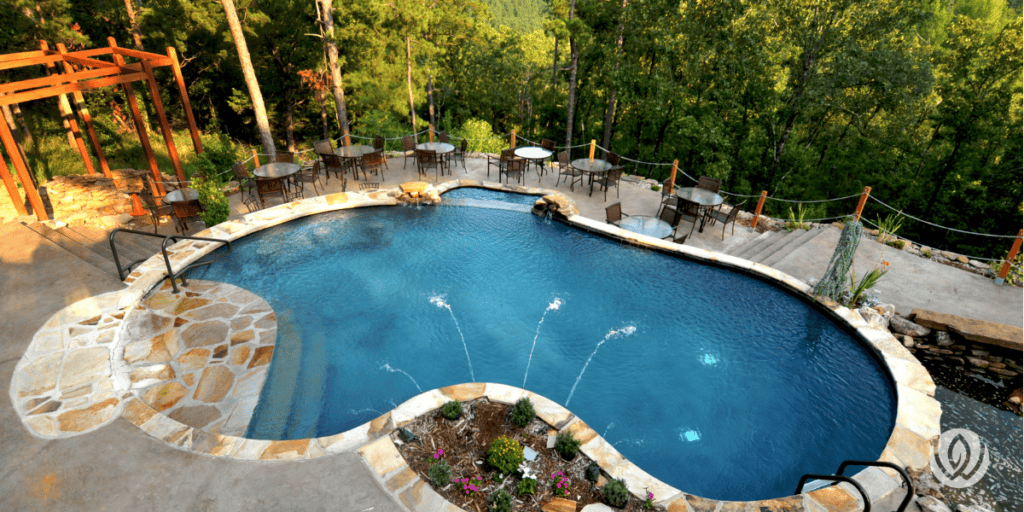
Freeform pools take a different approach.
Their organic shapes can work beautifully with naturalistic landscapes, irregular properties, and yards where the pool needs to respond to existing features.
A curved pool can follow the contours of a hillside or work around a mature tree, helping it feel more naturally integrated into the landscape.
The trade-off is complexity.
Curved pools can require more involved construction and design work, and their irregular shapes aren't compatible with every automatic pool-cover system.
With a freeform pool, the curves should feel intentional. The goal isn't simply to make the pool unusual; it's to make the shape feel like it belongs on the property.
There is also plenty of room between a simple rectangle and a completely freeform pool.
L-shaped and T-shaped designs can create distinct areas for different activities while maintaining the clean lines of a geometric design.
For example, one section might provide a deeper lane for swimming while another creates a wider, shallower area for lounging and entertaining.
These configurations can be especially useful when you want the pool to serve multiple purposes without compromising the overall design.

Before investing in a pool, another important factor to consider is the maintenance that comes with it.
The amount of work required depends on the pool surface, equipment, usage, and level of automation.
Typical pool maintenance includes:
During swimming season, water chemistry generally needs to be checked several times a week.
Regular maintenance helps protect the pool's finish, equipment, and water quality while keeping the pool comfortable to use.
In areas with drastically different climates throughout the year, like Maryland and Northern Virginia, pools also need to be prepared for changing seasons.
Opening a pool in the spring generally involves removing and cleaning the cover, starting equipment, and balancing the water.
Closing the pool before freezing temperatures arrive involves winterizing the plumbing, adjusting the water level, adding appropriate chemicals, and securing the cover.
It may seem like a daunting amount of work at first, but many homeowners choose to have a professional pool service handle both processes.
Luckily, modern pool automation can make ownership considerably easier.
Smart systems can allow homeowners to easily monitor and control elements like:
Many automated systems can even be managed from a smartphone, allowing you to spend less time managing the pool and more time enjoying it.
For homeowners creating a luxury outdoor living space, automation can be a key part of making the entire experience feel effortless.
According to U.S. Energy Information Administration data, over 70% of new residential pools now integrate automated systems, a figure that reflects how standard this technology has become on custom builds. For homeowners who want the experience without the daily management burden, automation significantly reduces the hands-on time required.

Now that you’re basically a pool pro, you’re probably wondering, how much does an inground pool cost?
The honest answer is that there is no single number.
Inground pool cost varies based on the material, size, shape, site conditions, features, and the surrounding outdoor construction.
As a general starting point, a basic fiberglass pool installation in Maryland may begin around $45,000 to $60,000, while a custom concrete pool with standard features may begin around $80,000 to $120,000.
Luxury pools with premium finishes, vanishing edges, attached spas, extensive water features, challenging site conditions, or significant surrounding construction can cost considerably more.
But the pool itself is only part of the investment. Many things can influence the final cost of an inground pool.
That's why it’s best to consider the entire vision when establishing a pool budget.
You don’t want to start the process and only then discover there isn't enough remaining to create the patio, kitchen, landscaping, or entertaining areas that make the backyard truly functional.
Planning everything together helps prioritize the features that matter most.
How long it takes to build an inground pool depends on the type of pool, the complexity of the design, site conditions, permitting, and the time of year construction begins.
Fiberglass installations can typically take around three to six weeks from excavation through completion.
On the other hand, custom concrete pools generally take longer because virtually every stage is completed on-site. Excavation, shotcrete, plumbing, electrical work, tile, coping, finishes, and final filling can bring the construction timeline to approximately eight to twelve weeks under normal conditions.
But construction is only one piece of the scheduling puzzle.
Acquiring permits in Maryland and Northern Virginia can add several weeks before construction even begins. Weather, material availability, site conditions, and other project-specific factors can also extend the timeline even further.
If your goal is to enjoy your new pool during the summer, it's important to start planning well before the swimming season. That means homeowners hoping to be swimming by Memorial Day will want to start the design and permitting process the previous fall.
An inground pool is a significant investment, but the right planning can make it much more than just an addition to your backyard.
At LiveWell Outdoors, we believe in starting with the full picture in mind. While an exciting feature, an inground pool is just one part of your backyard oasis.
It can become a place for exercise, relaxation, entertaining, and everyday connection with the outdoors, making your yard a true sanctuary.
If you're in the early stages of pool planning, we’re help to help. We’ll guide you through the entire process: evaluating your property, exploring design possibilities, and developing a plan that aligns with both your lifestyle and long-term vision.
Schedule a call today to start planning the pool your family has always dreamed of.
"*" indicates required fields